
Laparoscopy
- Home
- Laparoscopy
Laparoscopy
We provide advanced laparoscopy services to accurately diagnose and treat conditions that may affect fertility. This minimally invasive procedure allows our specialists to examine the reproductive organs in detail and address issues such as blocked fallopian tubes, endometriosis, ovarian cysts, and pelvic adhesions.
Using modern techniques and specialized equipment, our team ensures precise diagnosis, minimal discomfort, and faster recovery. Laparoscopy not only helps identify the root cause of infertility but also allows treatment to be performed during the same procedure when possible.
Treatment Process
Laparoscopy is performed under anesthesia using small incisions, making it a safe and minimally invasive procedure. A thin camera is inserted to carefully examine the internal organs and carry out any necessary treatment.
Most patients experience minimal discomfort and recover quickly. Depending on the individual condition, normal daily activities can usually be resumed within a few days.
Why is Laparoscopy Important?
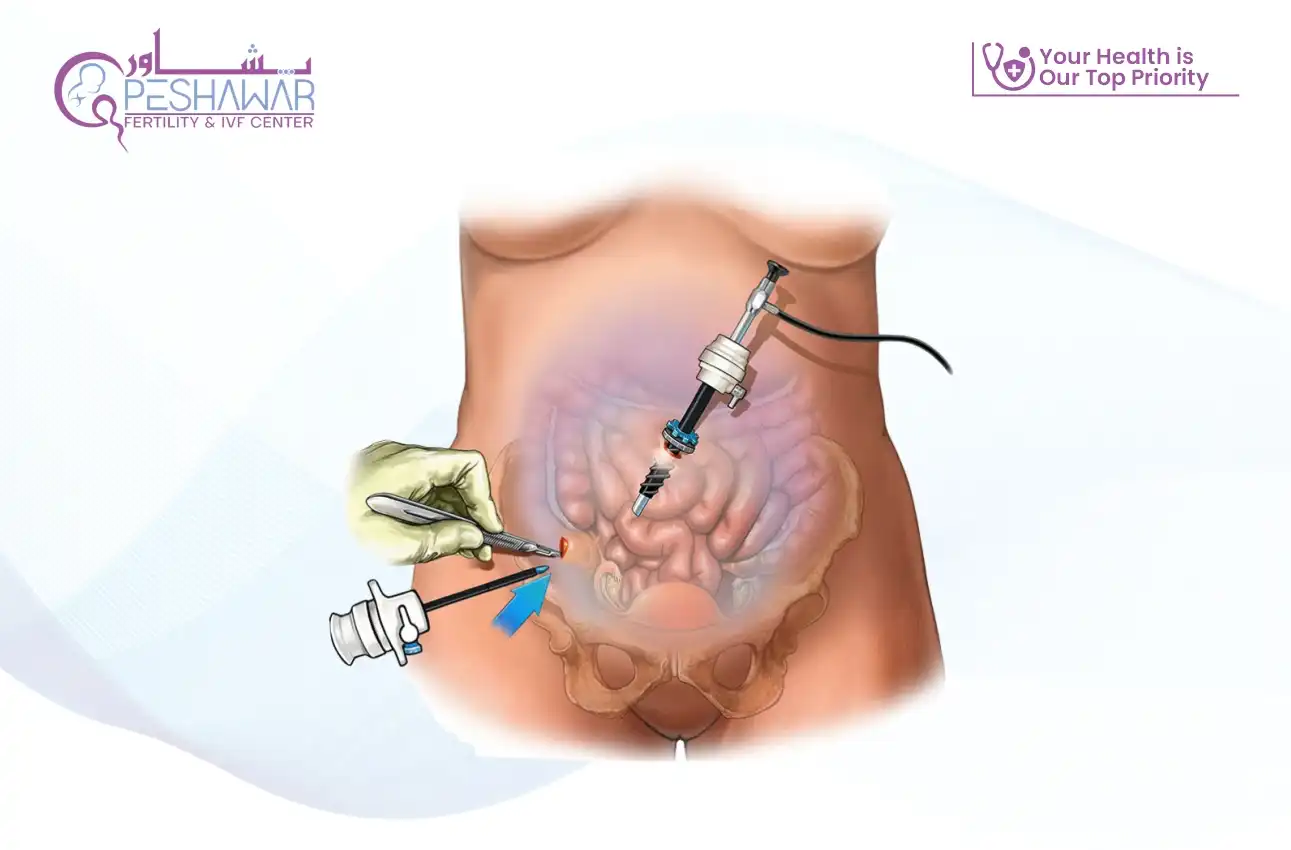
Laparoscopy plays a key role in fertility care by providing a clear and accurate diagnosis of underlying conditions that may not be detected through routine tests.
By identifying and treating issues such as endometriosis, blocked fallopian tubes, or adhesions, this procedure significantly improves the chances of successful conception and helps doctors plan more effective fertility treatments.





Get an Appointment
Start your journey to parenthood with expert care. Book your appointment today for a personalized consultation.
Frequently Asked Questions
Yes, laparoscopy is a safe and commonly performed procedure when carried out by experienced specialists. It involves minimal risk and is widely used in fertility treatment.
The procedure is performed under anesthesia, so you will not feel any pain during surgery. Mild discomfort after the procedure is normal and usually temporary.
Recovery time is generally short. Most patients return to their normal routine within a few days, depending on their overall condition.
It helps diagnose and treat conditions like blocked fallopian tubes, endometriosis, and pelvic adhesions, which can directly impact fertility.